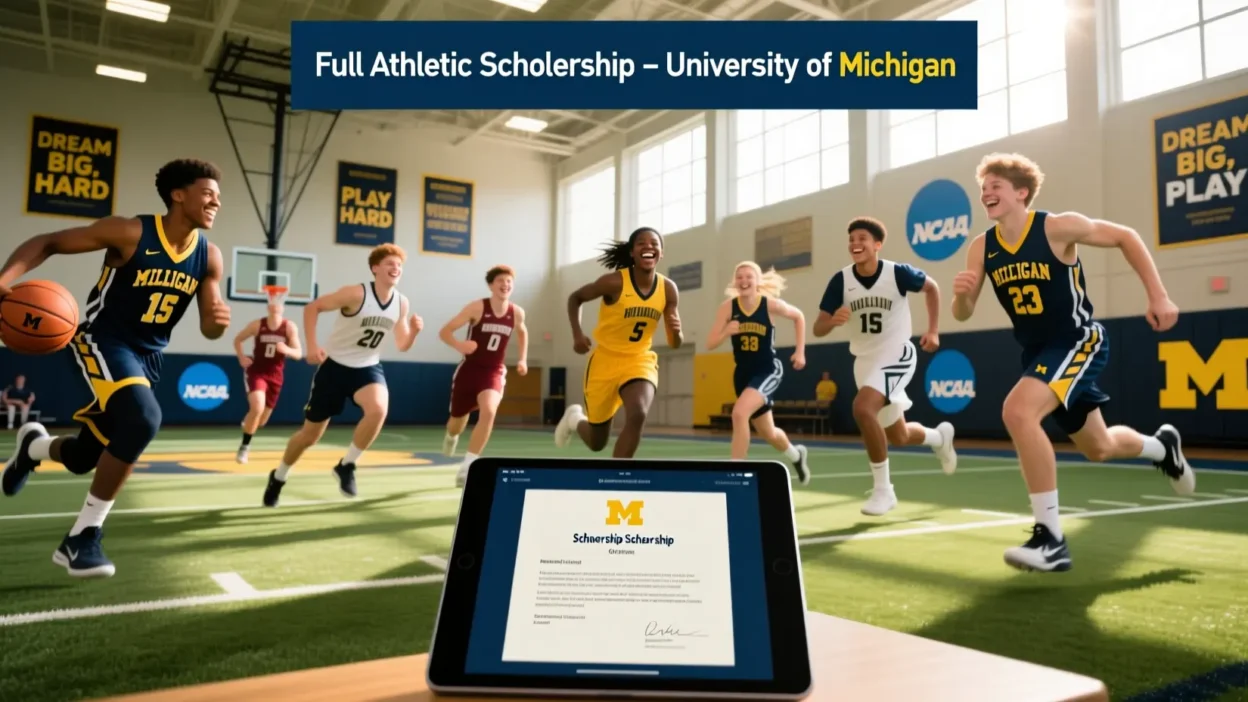
College sports scholarships in the United States are an exciting opportunity for students who love sports.
These scholarships help students pay for college while continuing to play their favorite sports. Many schools offer scholarships for sports like football, basketball, soccer, swimming, track, and more.
A sports scholarship can cover part or even all of college costs, including tuition, books, and living expenses.
This makes college more affordable and allows talented athletes to focus on both their education and sports.
In this article, we will explain how college sports scholarships work and how students can get them.
What Are College Sports Scholarships?
A college sports scholarship is money offered by a college to a student who is good at sports. These scholarships are given to help students pay for their college education. In return, the student usually plays for the college team. Scholarships can be full or partial. A full scholarship covers everything, while a partial scholarship covers only some expenses. Colleges give sports scholarships to attract talented athletes to join their teams.
Not all sports scholarships are the same. Some sports are more competitive than others. For example, football and basketball often have many scholarships available, while smaller sports like golf or tennis might have fewer. The type of scholarship a student can get depends on their talent, performance, and sometimes academic achievements.
Types of Sports Scholarships
There are different types of sports scholarships in the U.S. It is important for students to know which type they can apply for. The main types are:
- Full Scholarships – These cover all college costs, including tuition, housing, meals, and books. Full scholarships are rare and usually go to the best athletes.
- Partial Scholarships – These cover only part of the costs. A student might receive money for tuition but still need to pay for other expenses.
- Academic and Athletic Scholarships – Some scholarships are given to students who are good at both sports and studies. Colleges like students who perform well in the classroom and on the field.
- Division-Based Scholarships – In the U.S., colleges are divided into NCAA Division I, Division II, and Division III. Division I and II schools offer scholarships, while Division III schools usually do not. Division I schools often have the most scholarships and the highest competition.
How to Get a College Sports Scholarship
Getting a sports scholarship is not easy, but it is possible with dedication. Here are the main steps:
- Start Early – Students should start planning for scholarships in high school. Coaches look for talent early, so training and competing in school and club teams is important.
- Build a Strong Record – Colleges want athletes who perform well in their sport. Students should participate in competitions, keep track of awards, and show consistent improvement.
- Contact College Coaches – Sending emails or letters to college coaches is important. Students should introduce themselves, share their sports achievements, and express interest in playing for the college team.
- Create a Sports Resume – A sports resume includes achievements, awards, statistics, and videos of performance. This helps coaches see the student’s talent clearly.
- Maintain Good Grades – Many colleges require a minimum GPA for scholarship eligibility. Balancing academics and sports shows discipline and commitment.
Benefits of College Sports Scholarships
Sports scholarships offer many advantages beyond financial support. Here are some key benefits:
- Affordable Education – Scholarships help cover tuition and other costs, making college more affordable for families.
- Opportunity to Play at a Higher Level – Students get the chance to compete in college-level sports, which can lead to professional opportunities.
- Personal Growth – Being part of a team teaches discipline, teamwork, leadership, and time management.
- Networking Opportunities – Athletes meet coaches, teammates, and professionals who can help their future career.
- Balanced Life – Scholarships allow students to continue their passion for sports while completing their education.
Challenges and Considerations
While sports scholarships are exciting, they also come with challenges:
- High Competition – Many students compete for limited scholarships. Only the best athletes often receive full scholarships.
- Time Management – College athletes need to manage classes, training, travel, and competitions. It can be very demanding.
- Injuries – Sports always carry a risk of injury, which could affect scholarship eligibility.
- Pressure to Perform – Students may feel pressure to perform well in both academics and sports to maintain their scholarship.
Despite these challenges, many students find the experience rewarding. Proper planning and support from family and coaches can help overcome difficulties.
Tips for Success
Here are some tips for students who want to earn a sports scholarship:
- Train Regularly – Consistent practice is key to improving skills and staying competitive.
- Participate in Competitions – Competing in tournaments or leagues shows commitment and helps gain recognition.
- Keep Good Grades – Academics matter. Many scholarships require a certain GPA.
- Network with Coaches – Attend camps, workshops, and sports events to meet coaches and recruiters.
- Stay Motivated – Getting a scholarship takes time and effort. Staying focused and motivated is essential.
- Prepare a Highlight Video – A short video showcasing your skills can catch a coach’s attention quickly.
Conclusion
College sports scholarships in the United States provide an amazing opportunity for talented athletes.
They make college more affordable and allow students to continue their passion for sports. While competition is high, dedication, good grades, and strong performance can open doors.
Scholarships come in different types, from full to partial, and are available for many sports.
With early planning, consistent training, and proper guidance, students can achieve their dream of playing college sports while earning an education.
These scholarships not only support academics but also help athletes grow personally and professionally.