In today’s fast-paced digital world, distance learning has become more than just a convenience—it’s a necessity. From students juggling multiple responsibilities to professionals looking to upskill, the ability to learn remotely opens doors to knowledge that was once out of reach. But with so many online courses, platforms, and tools available, finding the right resources can feel overwhelming.
That’s where this guide comes in. We’ve curated a comprehensive list of top distance learning resources, including interactive apps, virtual libraries, productivity tools, and expert tips to help you maximize your online learning experience. Whether you’re starting your first online course or exploring advanced professional certifications, this guide will give you the insights and tools you need to study smarter, stay motivated, and achieve your learning goals from anywhere in the world.
Types of Distance Learning
Distance learning isn’t a one-size-fits-all approach. Understanding the different types can help you choose the resources and methods that fit your learning style and goals. Here are the main types:
- Synchronous Learning
Synchronous learning happens in real-time, often through live video classes or webinars. Platforms like Zoom, Microsoft Teams, and Google Meet allow learners to interact directly with instructors and peers. This method is ideal for those who thrive in structured environments and enjoy immediate feedback. - Asynchronous Learning
Asynchronous learning is self-paced, letting learners study on their own schedule. Platforms like Coursera, edX, and Khan Academy provide pre-recorded lectures, quizzes, and assignments. This type is perfect for busy professionals or students who need flexibility. - Blended Learning
Blended learning combines online and offline methods, giving students the best of both worlds. You might complete online modules while attending occasional in-person sessions or labs. - Microlearning
Microlearning breaks content into small, focused lessons, often via apps or short videos. Tools like Duolingo and Skillshare make it easy to learn efficiently in short bursts, which improves retention and engagement.
Understanding these types will help you choose the right distance learning resources for your goals and learning style.
Online Learning Platforms
One of the most important distance learning resources is online learning platforms. These platforms provide structured courses, expert instructors, and certificates that can boost your skills and career. Here’s a breakdown of the best options:
1. General Platforms
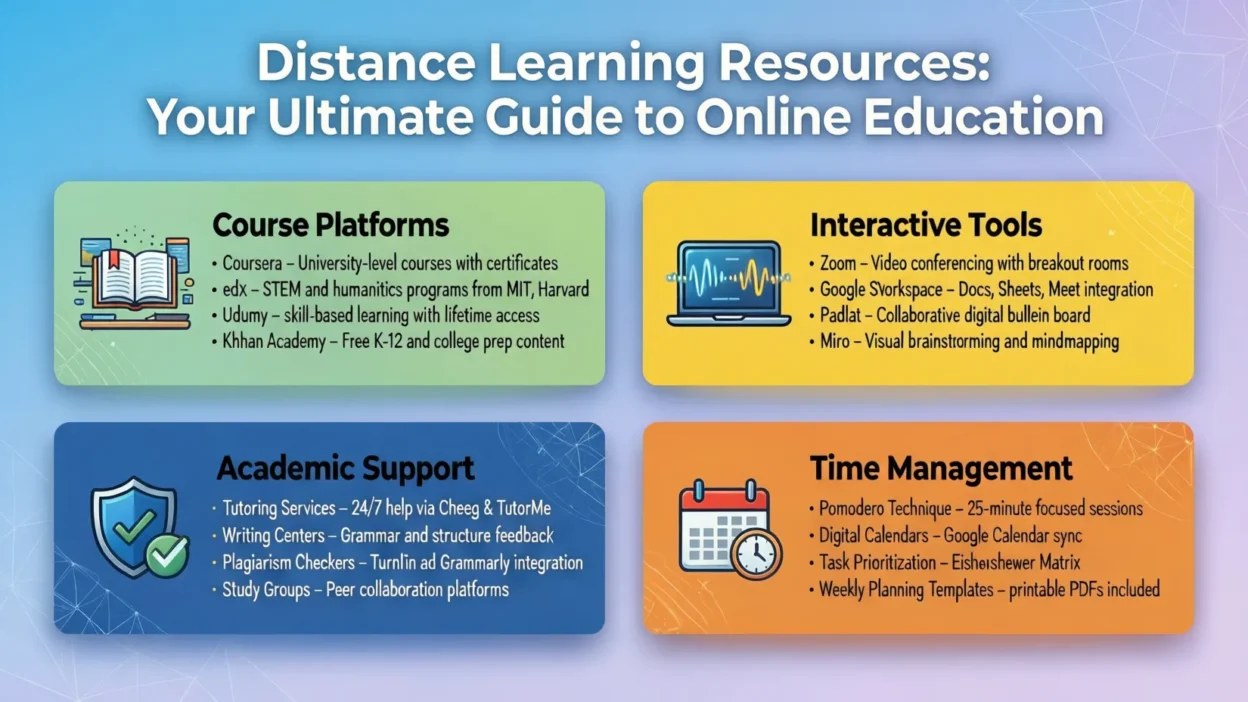
- Coursera – Offers courses from top universities worldwide. You can access free courses or pay for certifications in fields like business, technology, and personal development.
- edX – Known for high-quality university-level courses, edX offers free and paid options with professional certificates. Ideal for academic learners.
- Udemy – Offers thousands of affordable courses on practical skills like coding, design, and marketing. Perfect for learners seeking flexibility.
- FutureLearn – Features online courses from global universities and institutions, focusing on social sciences, business, and healthcare.
2. Specialized Platforms
- Codecademy – Interactive coding lessons for beginners and advanced learners.
- Skillshare – Creative-focused platform for learning photography, writing, design, and more.
- LinkedIn Learning – Professional development courses on business, tech, and creative skills, with certificates that can be added to your LinkedIn profile.
3. Free & Open Courseware
- Khan Academy – Free lessons in math, science, history, and more, ideal for school students and beginners.
- MIT OpenCourseWare – Free access to university-level course materials across a wide range of subjects.
By choosing the right platform, you can access a wealth of knowledge and tailor your distance learning journey to your goals.
Interactive & Gamified Learning Tools
Learning online doesn’t have to be passive. Interactive and gamified learning tools make studying more engaging, improve retention, and keep motivation high. These tools are especially helpful for students, professionals, and hobby learners who want hands-on practice.
1. Language Learning Apps
- Duolingo – Uses gamified lessons to teach over 40 languages. Short, interactive exercises make learning fun and effective.
- Babbel – Offers structured lessons for practical language use, ideal for conversational skills.
- Rosetta Stone – Focuses on immersive learning with interactive listening, speaking, and reading exercises.
2. Math & Science Practice
- Brilliant.org – Provides interactive problem-solving lessons in math, science, and computer science.
- Khan Academy – Offers exercises with instant feedback to help students master concepts at their own pace.
3. Skill-Based Interactive Tools
- Quizlet – Create digital flashcards and practice quizzes.
- Anki – Spaced repetition tool for memorizing concepts efficiently.
Benefits of Gamified Learning
- Increases engagement and motivation.
- Reinforces learning through immediate feedback.
- Encourages consistent daily practice.
By incorporating these interactive tools, learners can transform online education from a passive experience into a dynamic and enjoyable journey, making it easier to retain knowledge and apply it in real life.
Virtual Libraries and Research Resources
Distance learning isn’t just about courses—it’s also about accessing quality information. Virtual libraries and research tools give learners the ability to explore scholarly articles, eBooks, and educational content from anywhere in the world.
1. Scholarly Research Tools
- Google Scholar – Search for academic papers, theses, and research articles across all fields.
- JSTOR – Offers access to journals, books, and primary sources for in-depth research (some content may require subscriptions).
- ResearchGate – Connects researchers and provides access to scientific publications.
2. Free eBooks and Reading Resources
- Project Gutenberg – Free access to over 60,000 classic eBooks, ideal for literature, history, and humanities studies.
- Open Library – Borrow and read millions of books online for free.
- LibriVox – Audiobooks of public domain works for learning on the go.
3. Educational Podcasts and Webinars
- Podcasts and webinars provide expert insights, tutorials, and discussions in almost every subject. Platforms like TED Talks and edX Webinars offer high-quality content to complement online courses.
Tips for Using Virtual Libraries Effectively
- Define your research topic before searching.
- Use filters and advanced search tools to find credible sources.
- Take notes and organize references with tools like Zotero or Mendeley.
By leveraging virtual libraries and research resources, learners can deepen their understanding, support assignments, and gain access to credible knowledge that complements online courses.
Productivity and Collaboration Tools
Success in distance learning isn’t just about finding the right courses—it’s also about staying organized, focused, and connected. Productivity and collaboration tools help learners manage their time, track progress, and work effectively with peers or instructors online.
1. Note-Taking and Organization
- Notion – Combines notes, tasks, and projects in one workspace. Perfect for organizing courses and study materials.
- Evernote – Lets you capture ideas, clip articles, and keep everything searchable.
- OneNote – Microsoft’s free digital notebook for structuring lessons, notes, and projects.
2. Project and Task Management
- Trello – Visual boards and cards help manage assignments, deadlines, and group projects.
- Asana – Organize tasks, track progress, and collaborate with study groups or peers.
3. Communication Platforms
- Slack – Connect with classmates or instructors through channels and messages.
- Microsoft Teams – Combines chat, video calls, and document sharing for a seamless online classroom.
- Zoom – Host and attend live virtual classes or study sessions with video conferencing.
4. Study Planning and Habit Tracking
- Todoist – Schedule tasks and deadlines to stay consistent with online learning.
- Forest – Gamified focus app that encourages uninterrupted study sessions.
- Habitica – Turns study habits into a role-playing game to boost motivation.
Using these tools effectively can help learners stay productive, reduce stress, and maintain focus, making distance learning more structured and successful.
Tips for Effective Distance Learning
Mastering distance learning isn’t just about the tools and platforms—it’s also about habits, strategies, and focus. Here are essential tips to help you make the most of your online learning experience:
1. Set Up a Dedicated Study Space
Create a quiet, organized area free from distractions. A comfortable chair, good lighting, and a reliable internet connection make a huge difference in focus and productivity.
2. Manage Your Time Effectively
- Create a study schedule and stick to it.
- Break your day into focused learning blocks with short breaks (Pomodoro technique works well).
- Prioritize difficult tasks when your energy is highest.
3. Balance Self-Paced and Structured Learning
Mix synchronous classes with asynchronous learning to stay flexible yet disciplined. Use reminders and calendars to keep up with deadlines.
4. Avoid Procrastination
Set specific goals for each study session. Use apps like Forest or Todoist to track progress and maintain accountability.
5. Leverage Digital Tools
Take advantage of note-taking apps, productivity tools, and virtual collaboration platforms to stay organized and engaged.
6. Stay Connected and Seek Support
Join online forums, study groups, or communities to discuss concepts, ask questions, and stay motivated. Interaction increases learning retention and reduces feelings of isolation.
By following these tips, learners can maximize efficiency, retain knowledge better, and enjoy a structured, successful distance learning experience.
Challenges in Distance Learning
While distance learning offers flexibility and accessibility, it also comes with unique challenges that learners must be aware of. Recognizing these obstacles can help you overcome them and succeed in your online education journey.
1. Motivation and Self-Discipline
Without a physical classroom or fixed schedule, staying motivated can be difficult. Learners must set goals, create routines, and track progress to maintain consistency.
2. Digital Fatigue
Spending long hours on screens can lead to eye strain, fatigue, and reduced concentration. Regular breaks, ergonomic setups, and offline activities can help mitigate digital fatigue.
3. Access to Reliable Internet and Devices
Not all learners have access to high-speed internet or the latest devices, which can hinder participation in live classes or interactive tools. Planning for offline resources or lower-bandwidth options is key.
4. Overcoming Isolation
Learning remotely can feel lonely. Lack of peer interaction may affect engagement and retention. Joining online study groups, forums, or virtual classrooms helps maintain connection and motivation.
5. Time Management
Balancing work, family, and study can be challenging. Without proper scheduling, learners may fall behind or feel overwhelmed. Tools like calendars, to-do lists, and habit trackers are essential.
By anticipating these challenges and implementing strategies to address them, distance learners can stay productive, motivated, and successful in their online learning journey.
Emerging Trends in Distance Learning
Distance learning is constantly evolving, driven by technology, innovation, and learner needs. Staying updated on these trends helps learners and educators make the most of online education opportunities.
1. AI-Driven Learning Tools
Artificial intelligence is personalizing the online learning experience. Platforms can now adapt content to your pace and skill level, provide instant feedback, and suggest resources based on your progress. Examples include AI tutors and smart quiz systems.
2. Virtual Reality (VR) and Augmented Reality (AR)
Immersive VR and AR tools create hands-on learning experiences in fields like medicine, engineering, and science. These technologies help learners visualize concepts and practice skills in a safe, interactive environment.
3. Mobile Learning and Microlearning
Mobile apps and short, bite-sized lessons (microlearning) make it easier to learn anytime, anywhere. Tools like Duolingo, Skillshare, and Brilliant.org allow learners to study during short breaks or commutes.
4. Credentialing and Digital Certificates
Online courses now offer verified certificates and micro-credentials recognized by employers. Platforms like Coursera and LinkedIn Learning help learners showcase skills and boost career prospects.
5. Gamification and Interactive Simulations
Gamified learning and simulations enhance engagement, retention, and practical application of knowledge. This trend is especially popular in professional and technical education.
By leveraging these emerging trends, learners can access more personalized, interactive, and career-focused distance learning experiences, keeping their skills relevant in a rapidly changing world.
Conclusion
Distance learning offers unprecedented flexibility and access to knowledge, but success depends on choosing the right resources, tools, and strategies. From online learning platforms and interactive apps to virtual libraries and productivity tools, there’s a wealth of options available to learners of all levels.
While challenges like motivation, digital fatigue, and isolation exist, they can be overcome with proper planning, time management, and support from online communities. Staying updated on emerging trends—like AI-driven tools, VR/AR learning, microlearning, and digital certifications—can also help you stay ahead in your education and career.
Start by exploring the resources highlighted in this guide, pick the ones that fit your learning style, and create a structured study routine. With the right approach, distance learning can be efficient, engaging, and rewarding, empowering you to achieve your personal and professional goals from anywhere in the world.