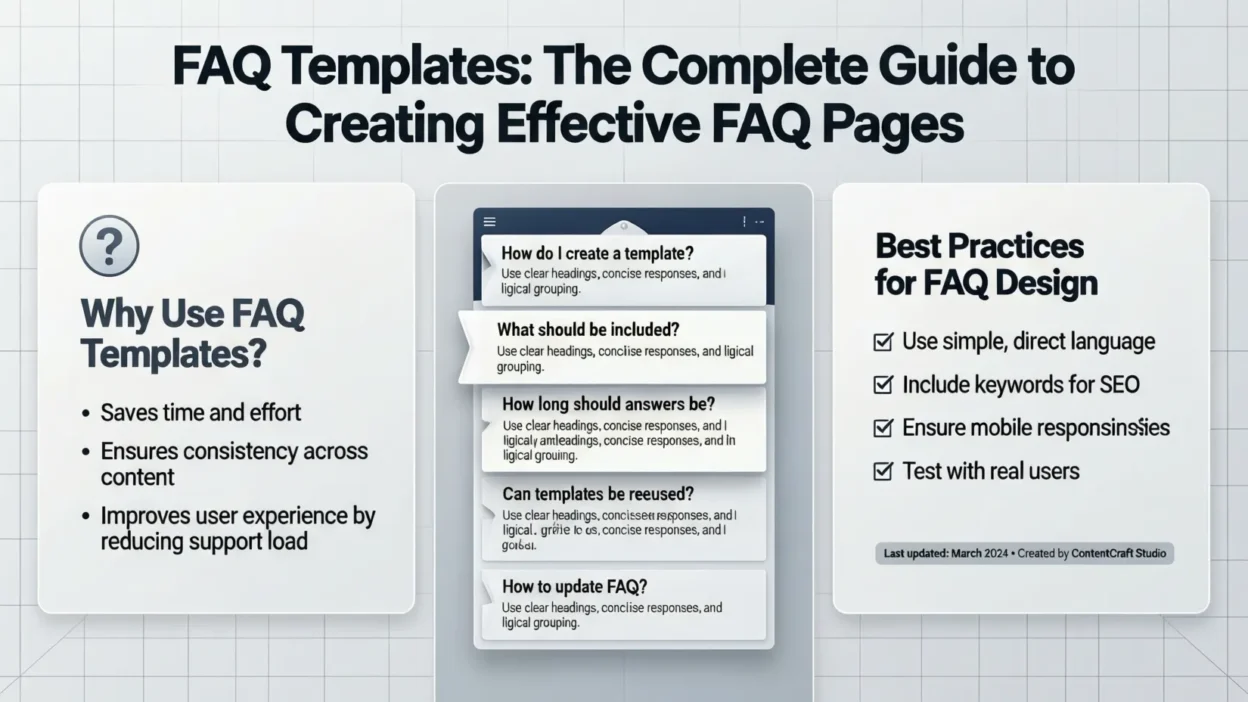
If you’re building a website, one of the simplest yet most powerful elements you can add is a well-structured FAQ section. FAQ templates help you organize common questions and clear answers in a way that saves time, improves user experience, and builds instant trust with your audience. Instead of guessing what visitors need, a strong FAQ page addresses their concerns before they even ask.
Whether you run a blog, small business, eCommerce store, or SaaS platform, using the right FAQ template can reduce support requests, improve navigation, and even boost your search engine visibility. Search engines love clearly structured questions and answers, and so do users looking for quick solutions.
In this guide, you’ll learn what FAQ templates are, why they matter, and how to use them effectively for different types of websites. You’ll also find ready-to-use examples, SEO best practices, and tips to help you create FAQ pages that truly work for your goals.
What Is an FAQ Template?
An FAQ template is a pre-structured layout designed to help you present frequently asked questions and their answers in a clear, organized, and user-friendly way. Instead of starting from scratch, a template gives you a ready-made framework where you simply add your own questions, answers, and links.
At its core, an FAQ template includes:
- Clearly written questions your audience is already asking
- Short, direct, and helpful answers
- A logical order that makes information easy to scan
FAQ templates are commonly used on business websites, blogs, online stores, SaaS platforms, and landing pages. They help visitors quickly find answers about pricing, services, products, policies, or processes without needing to contact support.
Unlike a full help center or knowledge base, an FAQ template is simple and focused. It’s ideal for addressing the most common concerns in one place while improving user experience, building trust, and supporting SEO through structured, searchable content.
Benefits of Using FAQ Templates
Using FAQ templates offers more than just convenience—they play a key role in improving how users interact with your website and how search engines understand your content. A well-designed FAQ section answers common questions upfront, reducing confusion and frustration for visitors.
One major benefit is better user experience. When people can quickly find clear answers, they’re more likely to stay on your site and take action. FAQ templates also help reduce customer support requests, saving time and resources by addressing repetitive questions in one place.
From an SEO perspective, FAQ templates can improve search visibility. Well-structured questions and answers align perfectly with search intent and can appear in featured snippets or “People Also Ask” results. They also help search engines crawl and understand your pages more effectively.
Additionally, FAQ templates build trust and credibility. Transparent answers about pricing, policies, and processes reassure visitors and remove objections, ultimately helping increase conversions and engagement across your website.
Key Elements of an Effective FAQ Template
An effective FAQ template is more than a list of random questions—it’s a carefully structured section designed to guide users quickly to the answers they need. The first essential element is clear, specific questions written in the same language your audience uses. Avoid vague wording and focus on real concerns your visitors are likely to have.
Next, provide concise but complete answers. Each response should be easy to understand, helpful, and straight to the point without unnecessary jargon. Formatting also matters. A good FAQ template uses logical grouping, placing related questions together so users can scan the page effortlessly.
Strong readability is another key element. Use bullet points, short paragraphs, and consistent styling to make the content skimmable, especially on mobile devices. Including internal links to related pages or resources can offer deeper explanations without cluttering answers.
How to Choose the Right FAQ Template
Choosing the right FAQ template depends on your website’s purpose, audience, and goals. Start by identifying the type of website you’re building. A blog typically needs a simple, informational FAQ template, while a business or eCommerce site may require more detailed sections covering pricing, policies, and support.
Next, consider user intent. Ask yourself what visitors are trying to achieve when they land on your page. Are they looking for quick answers, reassurance before buying, or help using a product? Your FAQ template should be structured to match those needs, placing the most important questions at the top.
Page placement also matters. FAQs on a homepage or landing page should be concise and conversion-focused, while a dedicated FAQ page can include more detailed explanations. Make sure the template you choose is mobile-friendly, easy to scan, and visually clean.
General FAQ Template (Universal Use)
A general FAQ template is designed to work for almost any type of website. It focuses on answering broad, commonly asked questions that help visitors understand who you are, what you offer, and how they can interact with your site. This type of FAQ template is especially useful for new websites, personal blogs, and small businesses.
Typically, a universal FAQ template includes questions about your purpose, services or content, basic policies, and how users can get support or contact you. The structure is simple: a clear question followed by a short, helpful answer. This makes the section easy to scan and quick to understand.
The strength of a general FAQ template lies in its flexibility. You can easily customize the questions to fit your niche while keeping the same layout. By starting with a universal FAQ template, you create a solid foundation that can later be expanded into more specific FAQ sections as your website grows.
Business Website FAQ Templates
Business websites need FAQ sections that build trust, clarify services, and remove doubts before a visitor reaches out or makes a decision. A well-structured business FAQ template helps answer practical questions while presenting your company as professional and reliable.
Small Business FAQ Template
For small businesses, the FAQ section usually covers essential information customers want to know right away. This includes questions about your services, pricing ranges, business hours, and how clients can get started. Clear answers help reduce unnecessary inquiries and set expectations early.
A small business FAQ template often includes:
- What services do you offer?
- How much do your services cost?
- How can I contact you?
- What areas do you serve?
Corporate or Professional Services FAQ Template
For larger or professional service-based businesses, FAQs tend to be more detailed. These templates address consultation processes, timelines, contracts, confidentiality, and client responsibilities. A professional FAQ template reassures potential clients by explaining how you work and what they can expect at every stage.
E-Commerce FAQ Templates
For online stores, a clear e-commerce FAQ template is essential. Shoppers often hesitate before purchasing, and unanswered questions about shipping, payments, or returns can lead to abandoned carts. A well-organized FAQ section removes uncertainty and builds confidence at the decision stage.
Most e-commerce FAQ templates focus on order-related concerns. Common sections include shipping and delivery, payment methods, returns and refunds, and order tracking. Each question should be written from the customer’s point of view and answered in a simple, reassuring tone.
An effective e-commerce FAQ template might address:
- How long does shipping take?
- What payment methods are accepted?
- Can I return or exchange a product?
- How do I track my order?
- What should I do if my order arrives damaged?
By answering these questions clearly, you reduce support requests, improve customer satisfaction, and increase conversions. A strong e-commerce FAQ template helps shoppers feel informed and confident throughout the buying process.
Product FAQ Templates
A product FAQ template is designed to answer questions specifically about how a product works, what it includes, and whether it’s the right fit for the customer. This type of FAQ is especially useful on product pages, where buyers often need reassurance before making a purchase.
Product FAQ templates usually focus on features, usage, compatibility, and limitations. Clear answers help set realistic expectations and prevent misunderstandings after purchase. They also reduce pre-sale questions by addressing common concerns upfront.
Typical questions in a product FAQ template include:
- What are the main features of this product?
- How do I use or set up the product?
- Is this product compatible with other tools or devices?
- What’s included in the package?
- Does the product come with a warranty or guarantee?
A well-written product FAQ template supports buying decisions, improves customer satisfaction, and strengthens trust by showing transparency and attention to detail.
Service-Based Business FAQ Templates
For service-based businesses, an effective service FAQ template helps explain how your services work and what clients should expect before, during, and after the engagement. These FAQs reduce uncertainty and help potential clients feel confident about choosing your service.
Service-based FAQ templates typically address booking, timelines, scope of work, and communication. Clear answers ensure both you and your clients are aligned from the start, which helps prevent misunderstandings later.
Common questions included in a service FAQ template are:
- How do I book your services?
- What is included in the service?
- How long does the process take?
- Do you offer revisions or follow-up support?
- What is your cancellation or rescheduling policy?
By clearly outlining expectations, a service-based FAQ template builds trust, saves time, and attracts better-qualified clients who understand your process before reaching out.
SaaS & Software FAQ Templates
A SaaS or software FAQ template focuses on helping users understand your platform, pricing, and technical processes. Since software products often involve subscriptions and ongoing use, a clear FAQ section plays a major role in onboarding and retention.
SaaS FAQ templates usually include questions about account setup, subscription plans, billing cycles, and upgrades. Security and data privacy questions are also important, as users want reassurance that their information is protected. Technical support and troubleshooting questions help users solve common issues without needing to contact support.
Typical questions in a SaaS FAQ template include:
- How do I create an account?
- Is there a free trial available?
- How does billing and subscription renewal work?
- Can I upgrade or cancel my plan?
- How secure is my data?
A strong SaaS FAQ template reduces friction, improves user confidence, and supports long-term customer satisfaction by making information easy to access and understand.
Blog & Content Website FAQ Templates
A blog or content website FAQ template helps readers understand your purpose, policies, and how they can interact with your content. While blogs may not sell products directly, a clear FAQ section builds credibility and answers common reader questions.
Blog FAQ templates often focus on content-related topics, such as what the blog is about, how often content is published, and whether the site uses affiliate links or advertisements. They may also include questions about guest posting, newsletter subscriptions, and content usage rights.
Common questions in a blog FAQ template include:
- What is this blog about?
- How often do you publish new content?
- Do you use affiliate links or sponsored content?
- Can I contribute or guest post?
- Can I share or reuse your content?
A well-structured blog FAQ template improves transparency, strengthens trust with readers, and helps manage expectations while supporting long-term audience growth.