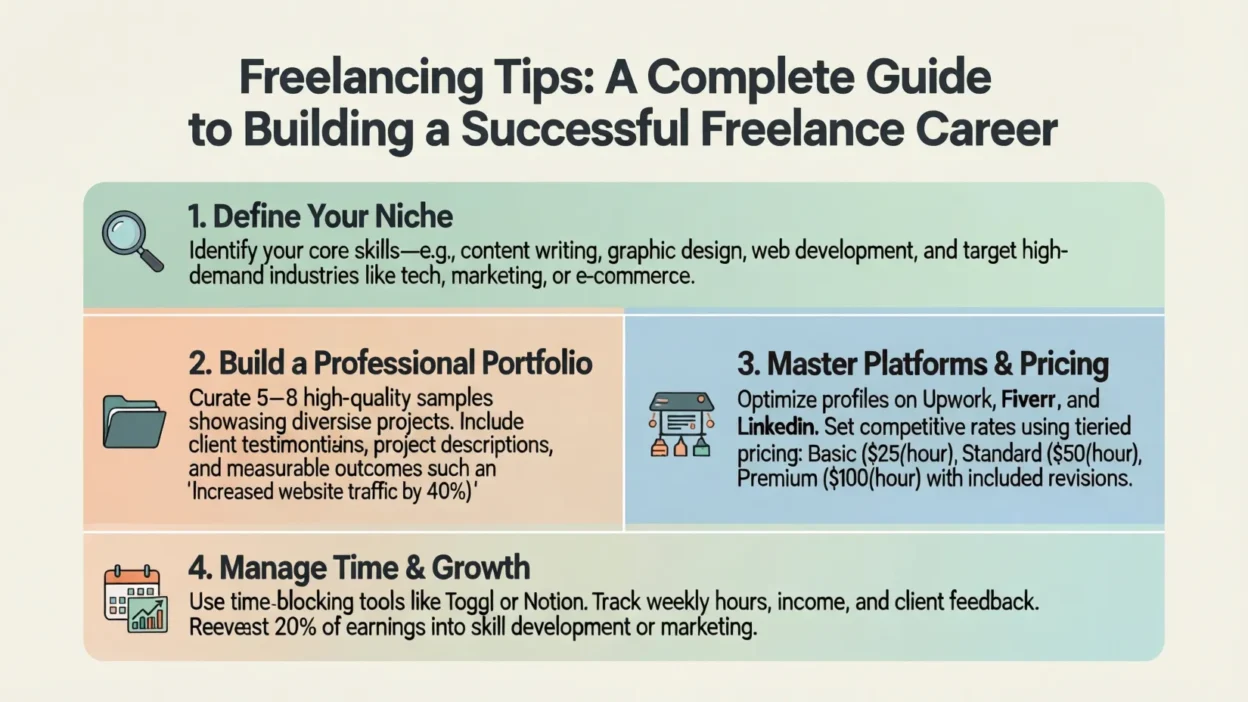
Freelancing has become one of the most popular ways to earn a living online, offering freedom, flexibility, and the opportunity to work on your own terms. From writers and designers to developers and marketers, millions of people are choosing freelancing to escape the traditional 9–5 routine. However, while freelancing looks attractive from the outside, building a successful freelance career takes more than just having a skill.
Many beginners struggle with finding clients, setting the right prices, managing time, and earning consistent income. Without proper guidance, freelancing can quickly feel overwhelming and unstable. That’s why learning proven freelancing tips is essential for anyone who wants long-term success instead of short-term gigs.
In this complete guide, you’ll discover practical, beginner-friendly freelancing tips that cover everything from getting started and finding clients to pricing your services and growing your freelance business. Whether you’re new to freelancing or looking to level up, this guide will help you build a sustainable and rewarding freelance career.
Why Freelancers Struggle (And Why These Freelancing Tips Matter)
Many people enter freelancing with excitement and high expectations, but a large number give up within the first year. This doesn’t happen because they lack talent—it happens because they lack direction, systems, and the right mindset. Understanding why freelancers struggle is the first step toward avoiding common mistakes and building a stable career.
One major reason is the absence of a clear niche. Beginners often try to offer multiple services to everyone, which makes it harder to stand out in a competitive market. Clients prefer specialists who solve specific problems, not generalists who do a little of everything. Without focus, freelancers struggle to attract quality clients.
Another challenge is treating freelancing like a hobby instead of a business. Many freelancers undercharge, skip contracts, and rely on a single platform or client for income. This leads to burnout, late payments, and financial stress. Poor time management and lack of routine also make it difficult to stay productive, especially when working from home.
That’s why proven freelancing tips are so important. The right strategies help you avoid costly mistakes, attract better clients, charge confidently, and build long-term stability. With proper guidance, freelancing can become a reliable, scalable, and rewarding career rather than an ongoing struggle.
Foundation Tips: Getting Started the Right Way
Building a successful freelance career starts with a strong foundation. Many freelancers fail not because they lack skills, but because they skip the basics and jump straight into finding clients. Setting things up correctly from the beginning saves time, builds confidence, and increases your chances of long-term success.
The first step is choosing the right freelance niche. Instead of offering every service you can do, focus on one or two skills that are in demand and align with your strengths. A clear niche helps clients understand exactly what you offer and why they should hire you. Specialists are easier to trust and often earn higher rates than generalists.
Next, define your services clearly. Outline what you do, what’s included, and what’s not. This prevents confusion, reduces revisions, and protects you from scope creep. Packaging your services also makes it easier for clients to choose and for you to price your work confidently.
Finally, build a strong portfolio—even if you’re a beginner. You don’t need paid experience to start. Personal projects, mock samples, or volunteer work can demonstrate your skills effectively. A simple, well-organized portfolio shows professionalism and reassures clients that you can deliver quality work.
How to Choose the Right Freelance Niche
Choosing the right freelance niche is one of the most important decisions you’ll make in your freelancing journey. Your niche defines who you serve, what problems you solve, and how easily clients can find and trust you. Without a clear niche, you’ll struggle to stand out in a crowded marketplace.
Start by identifying your strongest skills and interests. Ask yourself what services you can consistently deliver well and enjoy doing. Freelancing is a long-term career, so choosing something you can stick with matters just as much as profitability. Next, research market demand. Look at freelancing platforms, job boards, and social media to see what clients are actively hiring for and what problems they want solved.
It’s also helpful to think in terms of problem-based niches rather than just skills. For example, instead of being a “graphic designer,” you could specialize in “branding for startups” or “social media graphics for e-commerce brands.” This makes your services more specific and valuable.
Finally, don’t be afraid to start narrow and expand later. A focused niche helps you attract the right clients faster, charge higher rates, and build a strong reputation in your chosen market.
Define Your Freelance Services Clearly
Once you’ve chosen your niche, the next step is to clearly define your freelance services. Many freelancers lose clients or end up overworked because they never clearly explain what they offer. Clear services set expectations, build trust, and make your business look professional.
Start by listing exactly what you do and how you deliver it. Instead of vague descriptions, be specific about your services, outcomes, and process. For example, rather than saying “content writing,” you could offer “SEO blog writing with keyword research and on-page optimization.” Specific services help clients understand the value you provide.
Consider packaging your services into fixed offers. Service packages make pricing easier, reduce negotiation, and protect you from scope creep. Clearly state what’s included, the number of revisions, delivery timelines, and any add-ons. This avoids misunderstandings and keeps projects running smoothly.
Also, be clear about what you don’t offer. Setting boundaries is just as important as promoting your skills. When clients know exactly what to expect, you’ll spend less time clarifying details and more time delivering high-quality work efficiently.
Build a Strong Freelance Portfolio (Even Without Experience)
A strong portfolio is often the deciding factor for clients when choosing a freelancer. The good news is that you don’t need years of experience or dozens of paid projects to build one. What clients care about most is proof that you can solve their problem and deliver quality results.
If you’re just starting out, create sample projects that reflect the type of work you want to get paid for. These can include personal projects, mock assignments, or practice work for imaginary clients. For example, writers can publish sample blog posts, designers can create brand concepts, and developers can build demo websites or apps.
Focus on quality over quantity. A few well-presented samples are far more powerful than many average ones. Each portfolio piece should clearly show your skills, process, and results. If possible, add short explanations or case studies that explain what the project was about and how you approached it.
Finally, make your portfolio easy to access and navigate. Whether it’s a simple website, Google Drive folder, or freelancing platform profile, your portfolio should look professional and help clients quickly see why you’re the right choice.
Where to Find Freelance Clients
Finding clients is one of the biggest challenges freelancers face, especially in the beginning. The key is to avoid relying on just one source and instead use multiple channels to create consistent opportunities. When you diversify how you find clients, you reduce income risk and gain more control over your freelance business.
Freelancing platforms like Upwork, Fiverr, and Freelancer are popular starting points. They already have clients looking for services, which makes them beginner-friendly. However, competition can be high, so it’s important to optimize your profile and apply strategically rather than sending generic proposals.
Social media is another powerful client acquisition tool. Platforms like LinkedIn, Twitter (X), and Facebook groups allow you to showcase your expertise, connect with potential clients, and build relationships over time. Sharing helpful content and engaging with your target audience can naturally attract inbound leads.
You can also find clients through cold outreach and referrals. Sending personalized emails or messages to businesses that need your services can be highly effective when done correctly. At the same time, satisfied clients can become your best marketing tool by referring you to others, helping you grow through trust and reputation.
How to Write Freelance Proposals That Win Clients
Your proposal is often the first impression a client has of you, and it can make or break your chances of getting hired. Many freelancers fail because they send generic, copy-paste proposals that focus too much on themselves instead of the client’s needs. A winning proposal is clear, personalized, and solution-focused.
Start by carefully reading the client’s job description. Identify their main problem, goals, and any specific requirements. Then open your proposal by addressing that problem directly, showing the client that you understand what they’re looking for. This immediately sets you apart from freelancers who send automated responses.
Next, briefly explain how you can help. Highlight relevant experience, skills, or portfolio pieces that relate specifically to the project. Keep it concise and focused—clients don’t want long biographies. If possible, mention how your approach will benefit the client, not just what you’ll do.
End with a clear call to action. Invite the client to discuss the project further, ask a thoughtful question, or suggest a next step. A confident, well-structured proposal shows professionalism and increases your chances of landing quality freelance work.
How to Qualify and Choose the Right Clients
Not every client is a good fit, and learning how to qualify clients is a crucial freelancing skill. Working with the wrong clients can lead to stress, unpaid work, constant revisions, and burnout. Choosing the right clients helps you protect your time, energy, and income.
Start by watching for red flags early. Vague project details, unrealistic deadlines, unclear budgets, or hesitation to sign a contract are common warning signs. Clients who focus only on price instead of value may also be difficult to work with in the long run. Trust your instincts—if something feels off, it usually is.
Ask the right questions before accepting a project. Clarify the scope, timeline, communication process, and expectations. Understanding how the client measures success can also help you decide whether the project aligns with your skills and goals.
It’s also important to feel confident saying no. Turning down a bad client creates space for better opportunities. Professional boundaries show that you respect your work and yourself. In the long run, working with fewer high-quality clients is far more rewarding than juggling many difficult ones.
How to Price Your Freelance Services Confidently
Pricing is one of the hardest parts of freelancing, especially for beginners. Many freelancers undercharge out of fear of losing clients, but low prices often attract difficult clients and lead to burnout. Learning how to price your services confidently is essential for building a sustainable freelance career.
Start by understanding the different pricing models. Hourly pricing can work for ongoing or undefined projects, while project-based pricing is often better for clear deliverables. As you gain experience, value-based pricing allows you to charge based on results rather than time, increasing your earning potential.
Research market rates within your niche to get a realistic pricing range. Look at freelancing platforms, industry forums, and competitors offering similar services. Your rates should reflect your skills, experience, and the value you provide—not just what others are charging.
When discussing price with clients, communicate confidently and clearly. Avoid over-explaining or apologizing for your rates. If a client says your price is too high, offer alternative solutions such as adjusting the scope instead of lowering your value. Confident pricing attracts serious clients who respect your work.
Time Management and Productivity Tips for Freelancers
Managing your time effectively is critical when you’re your own boss. Without a structured schedule, it’s easy to procrastinate, overwork, or feel constantly overwhelmed. Good time management helps you stay productive while maintaining a healthy work-life balance.
Start by creating a daily or weekly work routine. Set specific working hours and treat them like a real job, even if you work from home. Time blocking—assigning specific tasks to specific time slots—can help you focus and avoid multitasking. Prioritize high-impact tasks that move your freelance business forward, such as client work and marketing.
Minimize distractions as much as possible. Social media, notifications, and household interruptions can quickly break your focus. Using productivity tools, turning off notifications, or working in focused sessions like the Pomodoro technique can significantly improve efficiency.
Finally, remember to schedule breaks and rest. Overworking leads to burnout and lower-quality work. Sustainable productivity comes from consistency, not long hours. When you manage your time well, freelancing becomes more enjoyable and less stressful.
Essential Tools Every Freelancer Should Use
Using the right tools can make freelancing easier, more organized, and more professional. Instead of juggling everything manually, smart tools help you save time, reduce errors, and focus on delivering quality work to your clients.
For project and task management, tools like Trello, Asana, or Notion help you track deadlines, manage workflows, and stay organized. These tools are especially useful when handling multiple clients at once. Clear task management prevents missed deadlines and last-minute stress.
Communication tools are equally important. Email, Slack, Zoom, or Google Meet allow you to communicate clearly and professionally with clients. Clear communication reduces misunderstandings and builds trust, which often leads to long-term working relationships.
You’ll also need tools for invoicing and payments. Platforms like PayPal, Wise, Payoneer, or invoicing software help you send professional invoices and get paid on time. Finally, consider using AI and automation tools to speed up repetitive tasks such as writing drafts, research, scheduling, or data organization. The right tools don’t replace your skills—they enhance your productivity and professionalism.
Contracts, Payments, and Legal Safety for Freelancers
Protecting yourself legally is not optional in freelancing—it’s essential. Many freelancers learn this lesson the hard way after dealing with unpaid work, scope creep, or difficult clients. Using contracts and clear payment systems helps you avoid these problems and work with confidence.
Always use a written contract before starting any project. A basic freelance contract should clearly define the scope of work, deadlines, payment terms, number of revisions, and ownership rights. Contracts set expectations for both you and the client and provide protection if disagreements arise.
Never start work without agreeing on payment terms. Asking for an upfront payment or milestone-based payments is a standard professional practice, not a red flag. This reduces the risk of non-payment and shows that the client is serious about the project.
If a client delays payment, follow up politely but firmly. Keep records of all communication and invoices. Using escrow systems on freelancing platforms or trusted invoicing tools can add an extra layer of security. Legal safety allows you to focus on delivering great work without constant worry.
Managing Freelance Finances and Income Stability
One of the biggest differences between freelancing and a traditional job is income consistency. Since freelance income can vary from month to month, managing your finances wisely is crucial for long-term stability and peace of mind.
Start by separating your personal and business finances. Use a dedicated bank account or digital wallet for freelance income and expenses. This makes it easier to track earnings, manage budgets, and prepare for taxes. Keeping clear records also helps you understand which services or clients generate the most income.
Create a simple budget based on your average monthly earnings rather than your best months. Set aside a portion of every payment for taxes and savings before spending anything else. Building an emergency fund that covers at least three to six months of expenses can protect you during slow periods.
To stabilize income, aim to secure retainer clients or long-term contracts. Retainers provide predictable monthly income and reduce the pressure of constantly finding new clients. With smart financial habits, freelancing can become just as stable—if not more—than traditional employment.
How to Grow and Scale Your Freelance Business
Once you have consistent clients and steady income, the next step is growth. Scaling your freelance business allows you to earn more without working longer hours and helps transform freelancing into a long-term, sustainable career.
Start by strengthening relationships with existing clients. Repeat clients are easier to work with, trust you more, and often pay better. Look for opportunities to upsell additional services or move clients onto monthly retainers. Small improvements in client value can significantly increase your income.
As demand grows, consider outsourcing or delegating low-value tasks. Hiring other freelancers or virtual assistants allows you to focus on high-impact work like strategy, client communication, and business development. This is often the first step toward building a small agency or consultancy.
Finally, invest in continuous learning and personal branding. Improving your skills, staying updated with industry trends, and building a strong online presence help you attract higher-paying clients. Growth doesn’t happen overnight, but with consistent effort and smart systems, your freelance business can scale beyond solo work.
Common Freelancing Mistakes to Avoid
Even experienced freelancers make mistakes, but being aware of the most common ones can save you time, money, and stress. Avoiding these pitfalls will help you build a stronger, more professional freelance career.
One major mistake is undercharging for your work. Low rates may attract clients quickly, but they often lead to burnout and low-quality relationships. Another common error is relying on a single client or platform for all your income, which puts your business at serious risk if that source disappears.
Skipping contracts is another costly mistake. Verbal agreements and casual messages are not enough to protect you. Without clear terms, you may face scope creep, payment delays, or disputes. Poor communication is also a frequent issue—unclear expectations can damage client relationships and lead to unnecessary revisions.
Finally, many freelancers stop marketing once they get busy. Consistent marketing is essential, even when you’re fully booked. Freelancing is a business, not just a skill. Avoiding these mistakes will help you build stability, confidence, and long-term success.
Conclusion: Turn Freelancing Tips Into Long-Term Success
Freelancing is more than just working independently—it’s about building a reliable business around your skills. While the freedom and flexibility are appealing, true success comes from having the right systems, mindset, and strategies in place. The freelancing tips covered in this guide are designed to help you avoid common struggles and move forward with clarity and confidence.
From choosing the right niche and pricing your services correctly to managing your time, finances, and client relationships, every step plays a role in your long-term growth. You don’t need to apply everything at once. Start small by implementing one or two tips, then build consistent habits over time.
Remember, freelancing is a journey, not a shortcut to instant income. Stay patient, keep learning, and treat your freelance work like a real business. With persistence and smart decisions, you can create a sustainable, rewarding freelance career that grows with you and supports the lifestyle you want.