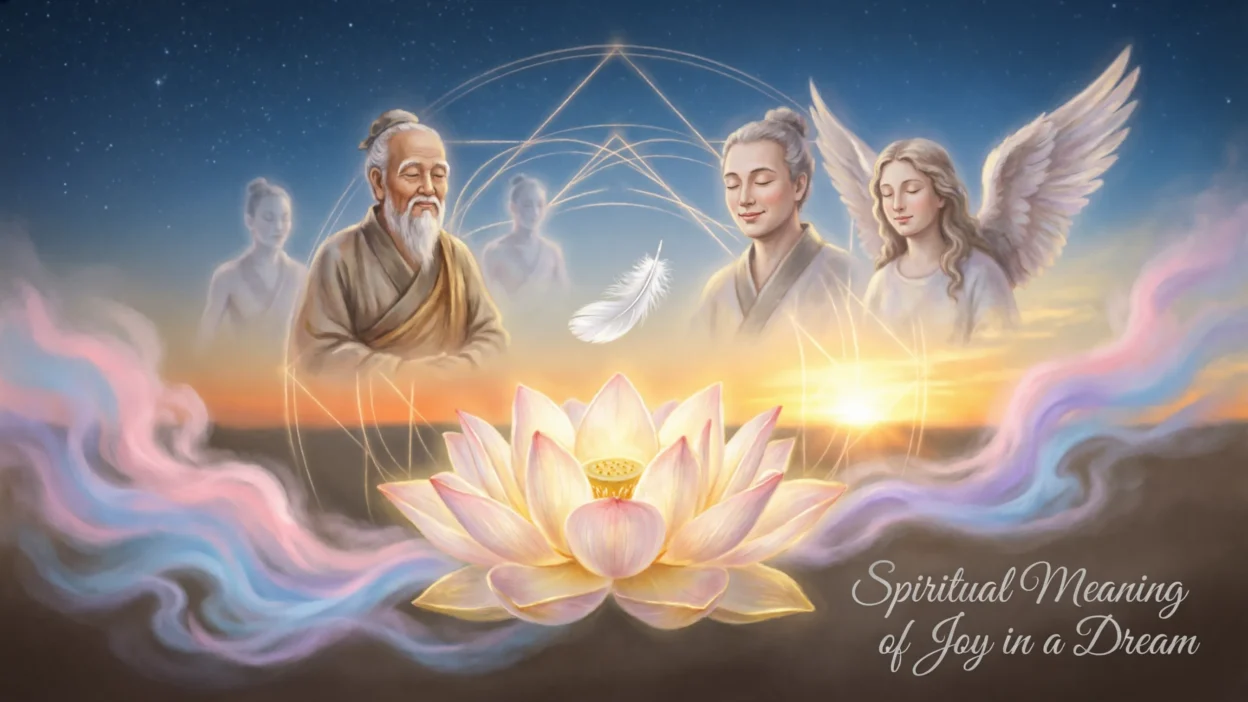
Waking up from a dream filled with pure joy can feel almost magical. Your heart feels lighter, your mind calmer, and for a moment, life seems aligned. Dreams like these often linger—not because they confuse us, but because they move us emotionally. If you’ve been searching for the spiritual meaning of joy in a dream, you’re likely sensing that this experience carried a deeper message.
Joyful dreams are not random. They often arrive during moments of inner healing, spiritual alignment, emotional release, or personal growth. Across spiritual traditions, psychology, and neuroscience, joy in dreams is seen as a powerful symbol of harmony between the soul and the mind.
This article explores the spiritual, psychological, and scientific meanings of joyful dreams—helping you understand why you experienced it and what it may be inviting you to realize.
Overview: How Joy in Dreams Connects Emotion and Spirituality
Dreams act as a bridge between your conscious emotions and your subconscious or spiritual self. When joy appears in a dream, it often reflects:
- Emotional balance or release
- Spiritual reassurance or alignment
- Inner peace after struggle
- A message of hope, gratitude, or fulfillment
Spiritually, joy in dreams is often viewed as a signal from the soul—affirming that you are on the right path or reminding you of a deeper truth you may have overlooked in waking life.
Spiritual Symbolism of Joy in Dreams
From a spiritual perspective, joy in dreams symbolizes alignment—between your inner self, your life purpose, and the energy surrounding you.
Key Spiritual Meanings
- Divine reassurance: A sign that you are spiritually supported
- Inner healing: Emotional wounds are resolving
- Soul alignment: Living in harmony with your values
- Gratitude awakening: Learning to appreciate the present
Many spiritual traditions see joyful dreams as moments when the soul feels free from fear, even briefly.
Personal Growth Themes Hidden in Joyful Dreams
Joyful dreams often appear during or after periods of emotional struggle, growth, or self-reflection.
They may indicate:
- Letting go of guilt or resentment
- Emotional maturity and self-acceptance
- Readiness for new beginnings
- Confidence in personal decisions
In this sense, joy becomes a milestone, not just an emotion.
Common Dream Scenarios Involving Joy
Different dream settings add layers of meaning to joy:
Feeling Joy Without a Clear Reason
This suggests inner peace or subconscious emotional release.
Laughing or Celebrating
Symbolizes freedom, social connection, or emotional validation.
Joy with Loved Ones
Reflects emotional security, healing relationships, or gratitude.
Joy in Nature or Light
Often represents spiritual awakening, clarity, or divine connection.
Childlike Joy
Points to innocence, creativity, and reconnecting with your authentic self.
Gradual Realization vs. Sudden Joy in Dreams
Gradual Joy
- Indicates slow healing
- Emotional integration
- Growing awareness of inner peace
Sudden or Explosive Joy
- Emotional breakthrough
- Spiritual revelation
- Release of long-held tension
The way joy appears reveals how transformation is unfolding within you.
Psychological Interpretations of Joyful Dreams
Freudian Perspective
Sigmund Freud viewed joy in dreams as wish fulfillment. These dreams may express:
- Repressed desires
- Emotional needs
- Longing for pleasure or relief
Joy represents satisfaction the waking mind may suppress.
Jungian Perspective
Carl Jung believed joy symbolized integration of the self.
- Balance between conscious and unconscious
- Acceptance of hidden parts of the psyche
- Emotional wholeness
Joy signals inner unity.
Modern Psychological View
Joyful dreams often occur when:
- Stress levels drop
- Emotional safety increases
- Positive self-image develops
Energy-Based and Spiritual Awakening Interpretations
From an energetic perspective, joy in dreams is linked to:
- Heart chakra activation
- Emotional energy flowing freely
- Alignment with higher vibrational states
Some spiritual belief systems interpret joyful dreams as:
- Messages from higher consciousness
- Soul-level reassurance
- Signs of energetic cleansing
Scientific Meaning: Why the Brain Creates Joyful Dreams
Neuroscience offers fascinating insight into joyful dreams.
REM Sleep and Emotional Processing
During REM sleep, the brain:
- Processes emotional memories
- Releases dopamine and serotonin
- Integrates emotional experiences
Joyful dreams may reflect emotional regulation and recovery.
Stress Reduction and Brain Chemistry
Positive dreams often occur when:
- Cortisol (stress hormone) decreases
- Emotional safety is restored
- The nervous system relaxes
Your brain is essentially rewarding emotional healing.
Common Causes and Triggers of Joyful Dreams
- Emotional closure or forgiveness
- Achieving personal goals
- Spiritual practices (prayer, meditation)
- Positive life changes
- Relief after stress or grief
Sometimes, joy appears simply because your mind and soul finally feel safe.
Reflection Tips: How to Understand Your Joyful Dream
1. Journal the Feeling
Write what made the joy feel real—not just the events.
2. Notice Waking-Life Parallels
Ask: Where am I feeling lighter or more aligned lately?
3. Practice Mindfulness
Meditation helps you reconnect with that emotional state.
4. Express Gratitude
Joyful dreams often invite conscious appreciation.
Mindful Summary: What Joy in a Dream Is Telling You
The spiritual meaning of joy in a dream is deeply reassuring. It suggests emotional healing, spiritual alignment, and inner peace. Psychologically, it reflects emotional balance and self-acceptance. Scientifically, it shows healthy emotional processing during sleep.
Joyful dreams don’t just comfort you—they confirm growth.
Frequently Asked Questions (FAQ)
Is dreaming of joy a good sign?
Yes. It often symbolizes emotional healing, inner peace, and spiritual alignment.
Why do joyful dreams feel so real?
During REM sleep, emotions are heightened, making joy feel vivid and meaningful.
Can joy in dreams predict positive changes?
Not predict—but it often reflects readiness for positive transformation.
What if I wake up missing the joy?
It may be an invitation to integrate that feeling into waking life.
Do joyful dreams have spiritual meaning for everyone?
Yes, though interpretation depends on personal beliefs and emotional context.