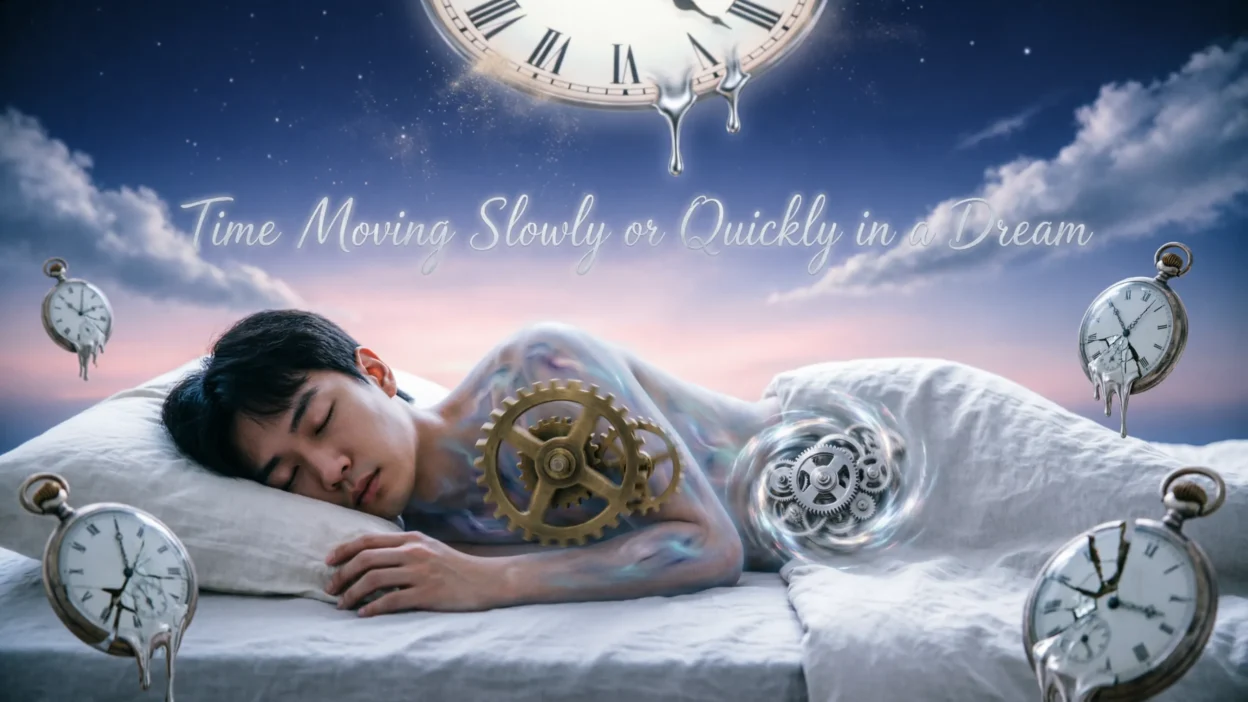
Have you ever woken up from a dream feeling like you lived an entire lifetime in minutes — or like time stood completely still? Dreams can stretch, compress, or completely distort time, leaving us with powerful emotional impressions. One moment may feel endless, while years of dream-life can pass in seconds. These experiences often stay with us long after waking, making us wonder: What does it mean when time moves slowly or quickly in a dream?
Understanding these dreams can reveal hidden emotions, spiritual messages, and fascinating brain science. The way time behaves in dreams is rarely random — it often reflects our inner world.
Overview: Emotional and Spiritual Connections
Dreams about time distortion often connect to your emotional state and spiritual awareness.
When time moves slowly, it may reflect feeling stuck, overwhelmed, or deeply focused on something important. Spiritually, it can suggest a moment of transformation or heightened awareness.
When time moves quickly, it may signal anxiety about life moving too fast, fear of missing opportunities, or excitement about upcoming change. Spiritually, it can symbolize life transitions or rapid soul growth.
These dreams act like mirrors — showing how you experience time emotionally and energetically.
Symbolism of Time Speed in Dreams
Slow-Moving Time Symbolism
- Feeling trapped in a situation
- Deep reflection or life review
- Fear or anticipation
- Spiritual pause or lesson
Fast-Moving Time Symbolism
- Fear of losing control
- Major life changes
- Growth happening quickly
- Urgency or excitement
Time in dreams is rarely about clocks. It usually represents perception, control, and emotional intensity.
Personal Growth Themes
Dreams about time often appear during periods of change.
You may be:
- Entering a new life phase
- Processing past experiences
- Facing big decisions
- Healing emotionally
- Developing spiritually
If time slows, your mind may be asking you to pay attention.
If time speeds up, it may be asking you to prepare or adapt.
Common Dream Scenarios
Time Moving Extremely Slowly
Often linked to stress, fear, or waiting for something important.
Example meaning:
You may feel emotionally stuck or pressured in waking life.
Time Moving Very Fast
Often connected to change, anxiety, or excitement.
Example meaning:
You may feel life is moving faster than you can handle.
Time Jumping or Skipping
Often linked to avoidance or subconscious processing.
Example meaning:
Your mind may be skipping over emotions you are not ready to face.
Gradual Realization vs. Sudden Reaction
Gradual Realization Dreams
You slowly notice time behaving strangely.
Possible meaning:
- Growing self-awareness
- Slow emotional processing
- Spiritual awakening unfolding naturally
Sudden Reaction Dreams
You suddenly realize time is wrong and feel shocked.
Possible meaning:
- Sudden life changes
- Emotional shock or breakthrough
- Urgent message from subconscious
Psychological Interpretations
Freudian Interpretation
Freud often linked dreams to hidden desires and unresolved conflicts.
Time distortion may represent:
- Repressed memories
- Anxiety about aging
- Fear of missed opportunities
Jungian Interpretation
Carl Jung viewed dreams as messages from the unconscious.
Time changes may symbolize:
- Transformation phases
- Archetypal transitions
- Movement toward wholeness
Energy-Based and Spiritual Interpretations
In spiritual traditions, time distortion dreams can indicate:
- Higher consciousness awareness
- Energy shifts or spiritual awakening
- Soul processing past or future lessons
- Entering deeper subconscious or astral states
Some belief systems suggest dreams exist outside normal time, allowing the mind or spirit to process experiences freely.
Causes and Triggers
Emotional Triggers
- Stress
- Trauma processing
- Major life transitions
- Anxiety about the future
- Nostalgia or past focus
Lifestyle Triggers
- Irregular sleep schedule
- Meditation or spiritual practices
- Intense emotional experiences
- New environments or routines
Scientific Explanation: What Happens in the Brain
REM Sleep and Dream Time
Most vivid dreams happen during REM (Rapid Eye Movement) sleep.
During REM:
- Brain activity is very high
- Logical time tracking is reduced
- Emotional centers are highly active
This is why dreams can feel longer or shorter than real time.
Emotional Processing
The brain uses dreams to:
- Process memories
- Regulate emotions
- Simulate possible future scenarios
Strong emotions can stretch or compress how time feels inside a dream.
Reflection and Self-Discovery Tips
Dream Journaling
Write down:
- How time felt
- Emotions during the dream
- Life events happening currently
Patterns often appear over time.
Mindfulness Practices
Try:
- Meditation
- Breath awareness
- Body scanning
These help you understand emotional signals behind dreams.
Ask Yourself
- Where do I feel rushed in life?
- Where do I feel stuck?
- Am I resisting or rushing change?
Mindful Summary
Dreams where time moves slowly or quickly often reflect how you experience life emotionally, spiritually, and mentally. They can signal transformation, stress, growth, or deep subconscious processing.
By paying attention to these dreams, you can better understand your inner world. Whether viewed spiritually, psychologically, or scientifically, time distortion dreams remind us that perception shapes reality — even while we sleep.
FAQ Section
Is it normal to experience time distortion in dreams?
Yes. It is very common and linked to how the brain processes emotions and memories during sleep.
Do fast-time dreams mean something bad?
Not necessarily. They often reflect change, growth, or emotional intensity.
Why do slow-time dreams feel so real?
Because emotional centers of the brain are very active during REM sleep.
Can spiritual awakening cause time distortion dreams?
Some spiritual traditions believe so, especially during periods of personal transformation.
Should I be worried about recurring time distortion dreams?
Usually no. But if dreams cause distress or sleep problems, talking to a sleep specialist or therapist can help.